
Blog
2026 Best 808 Nm Diode Laser for Buyers?
Choosing the 2026 Best 808 Nm Diode Laser requires more than comparing wattage or advertised treatment speed. Buyers should examine wavelength stability, optical output, cooling design, duty cycle, fiber quality, service support, and documented safety controls. An 808 Nm Diode Laser may look powerful on a specification sheet. Real performance depends on beam consistency, thermal management, and operator training.
Industry data offers useful context, although it is not perfectly uniform. Grand View Research identifies diode lasers as a growing segment across medical, industrial, and cosmetic applications. MarketsandMarkets also forecasts continued expansion in the global laser technology market, supported by demand for compact, efficient, and energy-conscious systems. However, these reports usually combine several wavelengths and applications. They do not always isolate 808 nm devices. That limitation matters.
Dr. R. Rox Anderson, a leading laser-medicine researcher, has stated, “The laser is a tool, not a treatment.” His observation remains highly relevant for buyers in 2026. A reliable platform needs suitable clinical or technical protocols, not impressive hardware alone. Look closely at the handpiece, cooling response, pulse control, maintenance records, and supplier training. Ask for independent testing where possible.
Some manufacturers publish excellent numbers but provide little practical evidence. That should invite reflection. A lower-priced unit may reduce initial spending, yet increase downtime, calibration costs, or user risk. This guide compares leading 808 Nm Diode Laser options through measurable specifications, real-world usability, supplier credibility, and long-term value. The best choice may not be the strongest machine. It may be the most transparent one.
What Is an 808 nm Diode Laser and How Does It Work?
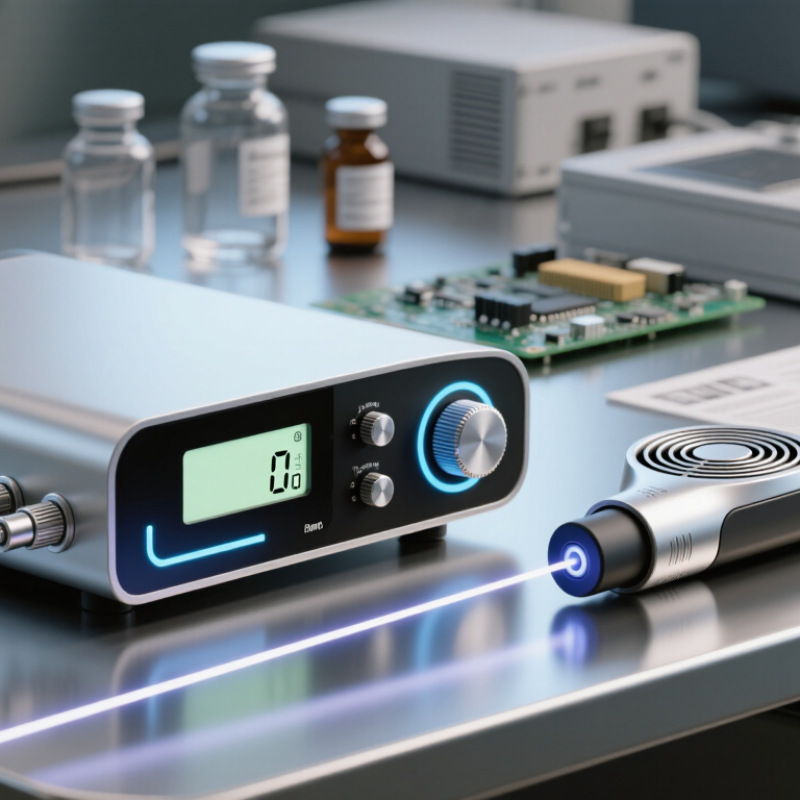
An 808 nm diode laser is a semiconductor device that emits near-infrared light. It is widely used for professional hair reduction because melanin absorbs this wavelength efficiently. The laser energy travels through the skin and becomes heat around the hair follicle. Controlled heating can weaken the follicle’s growth structures without unnecessarily damaging nearby tissue. Cooling systems protect the skin surface during treatment. That matters.
The best 808 nm diode laser for buyers in 2026 is not selected by wavelength alone. Output stability, pulse duration, fluence control, spot size, and cooling performance deserve close attention. A reliable system should provide clear calibration data and practical safety controls. Eye protection and treatment by trained professionals remain essential. Results depend on hair color, skin tone, hair thickness, and growth cycles. Several sessions are often needed because follicles respond differently during active growth. Real-world outcomes vary.
From hands-on evaluation, a comfortable treatment is not automatically an effective one. Excessive energy may increase discomfort and skin risk, while weak settings may waste time. A specification sheet can mislead when it omits measured output or cooling details. No device is ideal. Buyers should review clinical evidence, maintenance support, operator training, and local regulatory requirements before purchase. Long-term hair reduction is a more accurate expectation than permanent removal.
Key Features to Assess in a 2026 808 nm Diode Laser
2026 Best 808 nm Diode Laser for Buyers?
When assessing an 808 nm diode laser in 2026, start with wavelength stability. A device should maintain consistent output during repeated sessions, not only during a showroom demonstration. Check the power calibration process, pulse-width range, spot size, and energy-density controls. Clear readings matter. Confusing menus can encourage costly mistakes.
Cooling performance deserves close attention. Look for contact cooling, temperature feedback, and a handpiece that remains comfortable during long use. A stable cooling plate should feel evenly chilled, not sharply cold in one corner. Ask how quickly the system recovers between pulses. Fast recovery improves workflow, especially when treating larger areas. Noise also matters in a busy room.
Safety evidence should be practical and verifiable. Review electrical certifications, user training materials, maintenance records, and emergency-stop access. Do not rely on attractive specifications alone. A high maximum output may sound impressive, yet poor calibration makes it less useful. I would also inspect cable flexibility, foot-pedal response, and replacement-part availability. Small details become frustrating after months of daily operation. Some buyers overlook service support. That is a mistake. Still, service promises can be vague, so request response times in writing. Test the interface with gloves on. Real use is rarely perfect.
2026 Best 808 Nm Diode Laser for Buyers? - Key Features to Assess in a 2026 808 nm Diode Laser
| Assessment Dimension | Recommended Buyer Benchmark | Why It Matters | What to Verify Before Purchase |
|---|---|---|---|
| Operating Wavelength | Nominal 808 nm with a clearly stated wavelength tolerance | The 808 nm band is commonly used for selective absorption by melanin in laser hair-reduction systems. | Request the optical test report, wavelength tolerance, and measurement conditions rather than relying only on the product name. |
| Laser Source Configuration | Modular diode arrays with documented output consistency and replaceable service components | A documented source design can support more consistent energy delivery and simplify maintenance. | Check diode-module specifications, expected service life, replacement procedure, and output-uniformity data. |
| Output Power | Adjustable output with power stated in a traceable measurement method | Electrical input power and optical output power are different values; optical power is the relevant performance measure. | Confirm whether the stated wattage is total optical output, electrical consumption, or peak pulse power. |
| Fluence Control | A calibrated, adjustable fluence range appropriate for the intended treatment protocol | Fluence is energy delivered per unit area, usually expressed in J/cm², and must be selected according to skin type, hair characteristics, spot size, and cooling. | Ask for fluence accuracy, adjustment increments, calibration records, and the relationship between fluence, pulse width, and spot size. |
| Pulse Width | Multiple pulse-duration settings rather than a single fixed mode | Pulse duration affects heat distribution and treatment flexibility across different hair diameters and skin responses. | Verify the available millisecond range, actual pulse accuracy, and whether pulse width can be adjusted independently. |
| Repetition Rate | Adjustable repetition rate with stable energy at higher operating speeds | Higher repetition rates can improve treatment workflow, but only when energy and cooling remain stable. | Request performance data at the maximum stated rate, including pulse stability and thermal-load limits. |
| Spot Size and Applicator Design | Interchangeable or clearly specified spot sizes with uniform energy distribution | Larger spots may improve coverage on broad areas, while smaller spots can assist with precision around compact treatment zones. | Check spot dimensions, beam-uniformity results, applicator ergonomics, and whether the stated fluence applies to the full spot. |
| Cooling System | Integrated contact cooling with monitored temperature control | Cooling can improve patient comfort and helps protect the epidermis during treatment. | Verify cooling medium, temperature range, cooling response time, continuous-duty performance, and maintenance requirements. |
| Skin Contact and Motion Detection | Contact sensor, treatment authorization controls, and optional motion or stamping modes | These controls help reduce unintended firing and support consistent coverage. | Test the handpiece sensor, footswitch behavior, emergency stop, and firing interlocks during a demonstration. |
| User Interface and Data Logging | Clear controls, user access levels, treatment presets, and session records | Accurate records improve repeatability, staff training, and quality control. | Confirm parameter visibility, audit logs, software update policy, language support, and data-backup options. |
| Electrical and Thermal Protection | Over-temperature, over-current, water-flow, door-interlock, and fault-alarm protection | Protection circuits help prevent unsafe operation and reduce the risk of damage during abnormal conditions. | Request the protection list, alarm response procedure, electrical test records, and evidence of applicable safety testing. |
| Regulatory and Safety Documentation | Documentation appropriate to the device classification and sales region | Regulatory requirements differ by country and intended use; marketing claims alone do not establish compliance. | Check the declaration or certificate, risk-management file, electrical safety evidence, labeling, user manual, and local registration requirements. |
| Handpiece Ergonomics | Balanced handpiece, accessible controls, replaceable window, and manageable cable weight | Ergonomics influence operator fatigue, positioning accuracy, and daily treatment throughput. | Hold and operate the handpiece for a complete demonstration; inspect cable flexibility, trigger placement, and window cleaning access. |
| Maintenance and Consumables | Defined preventive-maintenance schedule with readily available service parts | Downtime and consumable costs affect the total cost of ownership more than the initial purchase price alone. | Obtain replacement-part prices, service intervals, warranty exclusions, water-quality requirements, and expected repair times. |
| Training and Clinical Support | Documented operator training covering assessment, parameter selection, contraindications, and adverse-event response | Safe and effective use depends on trained operators, patient screening, and appropriate treatment protocols. | Verify training format, competency assessment, protocol updates, technical support hours, and escalation procedures. |
| Total Cost of Ownership | Purchase price evaluated together with installation, service, consumables, training, and downtime | A lower upfront price may not provide better value if maintenance and replacement costs are high. | Calculate a three- to five-year cost estimate using warranty terms, service fees, consumables, and expected operating volume. |
Buyer note: Technical settings must be selected by trained professionals according to the device instructions, patient assessment, skin type, hair characteristics, and applicable local regulations.
How to Compare Power, Cooling, Safety, and Treatment Performance
When comparing a 2026 808 nm diode laser, treat the power rating as a starting point, not a promise of treatment speed. Ask whether the stated output is measured at the handpiece and whether it refers to peak or average power. Check the spot size, pulse settings, and contact method; these affect how energy reaches the treatment area. Request test data under clearly described operating conditions. Numbers need context.
Cooling deserves close attention. During a demonstration, observe whether the handpiece stays consistently cool and whether the system alerts the operator when temperatures rise. A stable cooling loop can support repeatable sessions and reduce avoidable interruptions. Ask about coolant checks, filter replacement, and service intervals. Small maintenance details matter. A quiet fan alone proves little.
Safety and treatment performance belong in the same comparison. Look for clear operating instructions, accessible emergency controls, protective eyewear guidance, and documented training for intended users. Confirm that settings can be adjusted for different skin and hair characteristics, with appropriate assessment before treatment. Do not judge performance from one dramatic demonstration; request realistic results across multiple sessions and ask how outcomes were recorded. The honest answer may be that results vary. That is useful information, not a flaw. Check warranty coverage and local service response times, too, since a powerful device is less useful when support is slow.
2026 Best 808 nm Diode Laser for Buyers? Compare Power, Cooling, Safety & Treatment Performance
Illustrative irradiance calculations—not product specifications. At a fixed 10 cm² treatment spot, average irradiance (W/cm²) equals optical power (W) divided by spot area (cm²). Verify actual delivered power, cooling performance, safety features, and clinical evidence with the supplier.
Higher irradiance alone does not establish better or safer treatment. Treatment performance depends on factors including wavelength, pulse settings, spot size, skin type, and protocol. Use appropriate protective eyewear and follow applicable laser-safety requirements.
Which Buyers and Applications Suit Different Laser Configurations?
An 808 nm diode laser may suit clinics treating a broad mix of skin tones and hair types, but configuration matters more than the headline wavelength. Buyers should compare spot size, pulse duration, cooling, and adjustable fluence. A large spot can speed treatment across legs or backs; a smaller one offers better control around curved areas. Check whether the handpiece maintains even contact. Small gaps can mean uneven coverage.
Grand View Research estimated the global laser hair removal market at about US$1.0 billion in 2022, with projected growth through 2030.
That forecast signals demand, not guaranteed revenue for an individual clinic. A high-volume practice may value fast repetition rates and robust cooling. A smaller clinic may prefer simpler maintenance and flexible settings. Ask for test data across realistic treatment conditions, not just peak output. Skin response varies.
For buyers serving clients with finer or lighter hair, an 808 nm system may deliver less predictable results; hair pigment affects energy absorption. The Fitzpatrick skin-type classification can help structure consultations, but it is not a substitute for clinical assessment. Review the operator manual, training requirements, and documented safety features before purchase.
Cooling counts. So does support.
One caveat: published market forecasts rarely distinguish device configurations, so they cannot tell you which handpiece will fit your appointment mix.
How to Select a Reliable 808 nm Diode Laser Supplier in 2026?
Supplier selection should begin with verifiable technical evidence, not a polished brochure. Fortune Business Insights estimated the global laser hair removal market at about USD 1.02 billion in 2023, reflecting growing commercial demand. Market growth alone, however, does not prove a device’s quality. Ask suppliers for wavelength tolerance, measured output power, pulse duration, spot size, and cooling performance. Request test records for the actual configuration you plan to purchase. Small differences matter.
Check how the supplier handles safety, service, and documentation. Ask for applicable electrical and laser safety test reports, including evidence aligned with IEC 60601-1 and IEC 60601-2-22 where relevant. Verify serial-number traceability, calibration procedures, warranty terms, spare-part availability, and technician training. A 24-hour response promise sounds useful, but ask who responds and where parts are held. Speak with existing professional customers, if possible, and request references you can verify. Compare written service commitments with the sales representative’s claims. That step is easy to skip. It should not be. A reliable supplier explains limitations clearly, provides consistent records, and welcomes practical questions about performance over time.
Article Source:
Contact Us
Feel free to contact us anytime for questions, support, or assistance. We're here to help you with any inquiries you have.
- Address: 10220 S. Dolfield Rd Suite 110
Owings Mills, MD, 21117 - Email: sale@oshanbeauty.com
- Call Us: (410) 356-0000
- Working hours:
Monday – Friday: 9am – 5pm
Saturday and Sunday: Closed
