Blog
What Are China Best Skin Care Treatments?
China’s skincare landscape is moving from beauty trends toward measurable skin health. Euromonitor International’s Beauty and Personal Care research identifies China as one of the world’s most influential beauty markets. Its reports also highlight stronger demand for efficacy, ingredient transparency, and personalized routines. These shifts help explain why Skin Care Treatments now include professional facials, barrier-repair programs, laser procedures, and medically supervised solutions.
The China National Medical Products Administration regulates cosmetics and medical aesthetic products through different frameworks. This distinction matters. A hydrating facial in a beauty salon is not equivalent to laser resurfacing in a licensed clinic. Qualified practitioners should assess skin type, pigmentation, sensitivity, medication history, and realistic recovery time. The American Academy of Dermatology also emphasizes daily sun protection, gentle cleansing, and evidence-based ingredients. These basics often support better results than dramatic promises.
Real skin is less predictable.
Mintel’s consumer research on China’s beauty market reports rising interest in science-led formulas, multifunctional products, and dermatologist-related credibility. However, market surveys may reflect purchasing intentions rather than confirmed clinical outcomes. Social media reviews can also overrepresent unusually fast results. That limitation deserves attention. The best approach compares treatment goals, safety evidence, practitioner credentials, product registration, and aftercare requirements. This guide examines popular Skin Care Treatments in China with a practical lens. It considers visible benefits, possible irritation, downtime, cost differences, and the point where professional medical advice becomes necessary. No single treatment suits every face. Even well-designed routines may require adjustment.
Skin Assessment in China: Skin Type, Acne Rates, and Barrier Health
What Are China’s Best Skin Care Treatments?
A useful treatment begins with a careful skin assessment, not a trending ingredient. The Chinese Acne Guidelines (2019) report acne in about 80–90% of adolescents. Adult acne remains common, especially among women. However, acne rates vary by age, region, climate, and survey method. A short consultation should record lesion type, oiliness, sensitivity, pigmentation, and medication history.
Skin type is not permanent. A humid summer may increase shine, while dry air can increase tightness and flaking. Dermatology clinics often assess barrier health through redness, scaling, stinging, and transepidermal water loss. Current clinical literature does not support one national barrier-health cutoff for everyone. That limitation matters. Self-assessment can be misleading.
The 2024 China facial skincare market research from Mintel highlights stronger consumer interest in efficacy and ingredient transparency. Yet consumer preference is not clinical proof. A sensible plan may use a gentle cleanser, a measured moisturizer, and daily broad-spectrum sun protection. Acne-prone skin may need professionally selected retinoids, benzoyl peroxide, or other approved treatments. Treatment strength should match tolerance. Too much can worsen irritation.
A practical assessment includes photos in consistent lighting and a review after four to eight weeks. Improvement should be measured by fewer inflamed lesions and less discomfort, not shine alone. In my view, the weak point is overconfidence: even experienced observers can confuse acne, folliculitis, and irritation. Persistent, painful, or scarring lesions require evaluation by a qualified dermatologist.
Cleansing Standards: pH 4.5–6.5 for Barrier-Friendly Daily Care
What Are China Best Skin Care Treatments?
Cleansing Standards: pH 4.5–6.5 for Barrier-Friendly Daily Care
Many effective skin care routines begin with gentle cleansing, not aggressive treatment. The skin surface is naturally mildly acidic. A cleanser with a pH around 4.5–6.5 may help support this protective environment. It can reduce the tight, squeaky feeling caused by harsh washing. However, pH is not the only quality measure. Ingredients, fragrance, cleansing strength, and personal tolerance also matter.
Most healthy skin needs lukewarm water and a short cleansing time. After rinsing, the face should feel clean but comfortable. Persistent stinging, redness, or flaking deserves attention from a qualified dermatologist. A balanced cleanser may still irritate sensitive skin. That detail is easy to overlook. Patch testing can reveal problems before daily use, although it is not perfect.
Tips: Check the product’s pH when reliable information is available. Avoid scrubbing with rough towels or repeated washing. Cleanse more carefully around the nose and hairline, where oil can collect. If your skin feels tight after cleansing, reduce water temperature and washing time. Track changes for two weeks. Skin care is personal, and a routine that looks ideal on paper may need adjustment.
What Are China Best Skin Care Treatments? - Cleansing Standards: pH 4.5–6.5 for Barrier-Friendly Daily Care
| Care Dimension | Recommended Standard | Why It Matters | Practical Daily Guidance |
|---|---|---|---|
| Cleanser pH | pH 4.5–6.5 | This range is close to the skin’s naturally mildly acidic surface and is generally more compatible with the barrier than strongly alkaline products. | Choose a cleanser labeled pH-balanced or suitable for sensitive skin, and avoid relying only on product claims when irritation occurs. |
| Normal or combination skin | Low-foam or gentle foaming cleanser within pH 4.5–6.5 | Removes sweat, excess oil, and surface debris without unnecessary stripping. | Cleanse once in the evening and optionally in the morning if the skin feels oily or has heavy product residue. |
| Dry or sensitive skin | Cream, milk, balm, or low-lather cleanser within pH 4.5–6.5 | A mild formula and limited cleansing can help reduce tightness and preserve surface lipids. | Use lukewarm water, avoid vigorous rubbing, and apply moisturizer soon after patting the skin dry. |
| Oily or acne-prone skin | Non-comedogenic, gentle cleanser within pH 4.5–6.5 | Over-cleansing can increase dryness and irritation, which may make acne care harder to tolerate. | Cleanse after sweating and at night; do not scrub or wash repeatedly to remove normal skin oil. |
| Makeup or water-resistant sunscreen removal | Two-step cleansing only when needed | An oil- or balm-based first step can loosen long-wear products, while a gentle water-based cleanser removes remaining residue. | Use light pressure and rinse thoroughly; avoid routine double cleansing when no durable product has been worn. |
| Water temperature | Lukewarm water | Very hot water can worsen dryness, redness, and discomfort, especially in sensitive skin. | Rinse with comfortably warm water and gently pat dry with a clean, soft towel. |
| Cleansing duration | About 20–30 seconds for a normal wash | Adequate contact helps remove surface impurities without extending exposure to surfactants unnecessarily. | Massage gently with fingertips; do not use brushes or abrasive tools as a substitute for a suitable cleanser. |
| Exfoliating cleansers | Use selectively according to tolerance | Acid or abrasive cleansing products may cause stinging, dryness, or irritation when used too frequently. | Introduce one active product at a time, follow its directions, and reduce use if redness or peeling develops. |
| Post-cleansing care | Moisturize while skin is slightly damp | Moisturizer supports hydration and can reduce the feeling of tightness after washing. | Apply a fragrance-free moisturizer suited to the skin type; use sunscreen during daytime outdoor exposure. |
| Signs of excessive cleansing | Tightness, burning, persistent redness, flaking, or increased sensitivity | These symptoms may indicate irritation or reduced tolerance rather than improved cleanliness. | Reduce washing frequency, stop abrasive or strongly fragranced products, and seek professional advice for persistent symptoms. |
Note: Skin response varies by person. A cleanser’s pH is one consideration alongside surfactant type, fragrance, preservatives, cleansing frequency, and individual tolerance.
Sun Protection: Broad-Spectrum SPF 30+ and China’s PA++++ Rating
What Are China Best Skin Care Treatments?
Sun protection is one of the most practical skin care treatments in China. A broad-spectrum sunscreen with SPF 30 or higher helps reduce UVB exposure, which causes sunburn and contributes to skin aging. The PA system measures UVA protection. PA++++ indicates the highest commonly used grade in this system.
Look for clear SPF and PA labeling on the package. Apply enough sunscreen to cover the face, ears, neck, and exposed hands. Two finger-length portions can be a useful starting point for the face and neck, though hand size differs. Reapply after sweating, swimming, or several hours outdoors. Cloudy days count. UVA can pass through light cloud cover and windows.
I learned this through an ordinary mistake: I protected my face but ignored my neck. That uneven exposure became visible in photographs. Sunscreen also works better with shade, hats, sunglasses, and long sleeves. Water-resistant formulas may help during outdoor activities, but the label still matters. Sensitive skin may react to fragrance or alcohol, so patch testing is sensible. Do not treat PA++++ as unlimited protection. Reapplication remains necessary, and local rules may affect product labeling. Check the official package information rather than trusting exaggerated online claims. Reapply gently.
Brightening Treatments: Niacinamide 2–5% and Vitamin C Evidence
For uneven tone, niacinamide and vitamin C are practical options in many Chinese skincare routines. Niacinamide at 2–5% has evidence for supporting the skin barrier, reducing excess oil, and improving dull-looking skin. It is usually gentle enough for daily use. However, higher percentages are not automatically better. Some users experience redness, tightness, or small bumps.
Vitamin C may help soften the appearance of dark spots and protect against environmental stress. Its results depend on the formula, storage, and regular sunscreen use. Freshly opened products can feel smooth, while poorly stored formulas may darken or smell metallic. That detail matters. Scientific evidence supports vitamin C, but studies vary in ingredient strength and preparation. Results are rarely instant, and personal expectations can be too high.
Tips: Apply niacinamide after cleansing, then use moisturizer. Start vitamin C every other morning. Patch-test each product near the jaw for several days. Use broad-spectrum sunscreen daily, especially during outdoor commutes in bright, humid cities. If stinging continues, stop and consult a qualified dermatologist. I would not combine several strong brightening products at once; that approach often creates irritation instead of clarity.
What Are China’s Best Skin Care Treatments?
Brightening Treatments: Niacinamide 2–5% and Vitamin C Evidence
The chart shows concentration ranges commonly evaluated in topical brightening research. Niacinamide has clinical evidence at approximately 2–5%, while topical L-ascorbic acid formulations are commonly studied in the 5–20% range. These concentration ranges are not a direct comparison of effectiveness; results also depend on formulation stability, skin tolerance, sunscreen use, and treatment duration.
Clinical Options: Lasers, IPL, Peels, and NMPA Safety Standards
What Are China Best Skin Care Treatments?
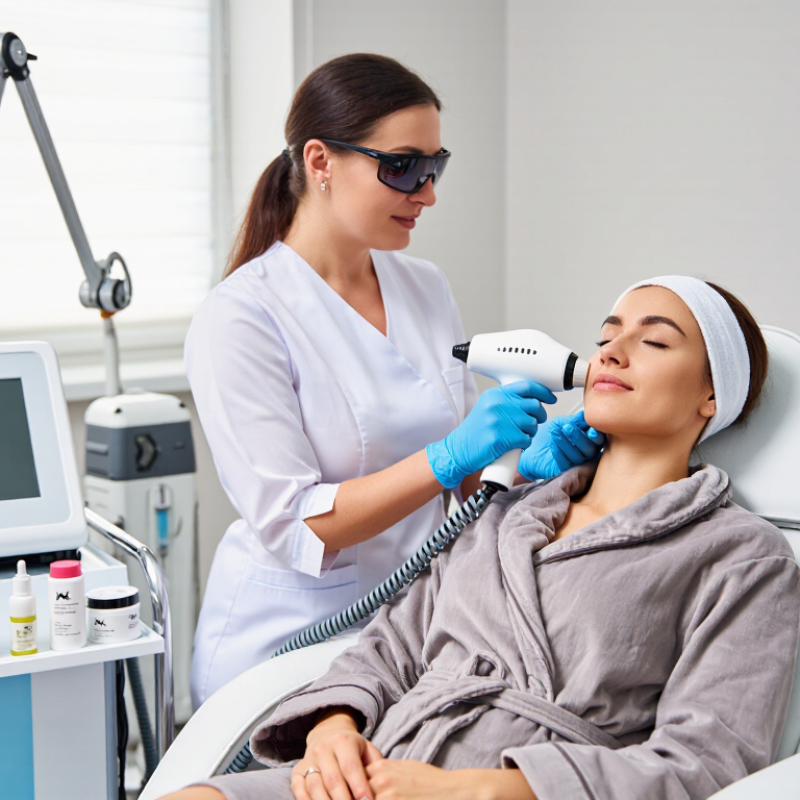
China offers several clinically used options for uneven tone, acne scars, redness, and texture. Lasers can target pigmentation or stimulate collagen, but settings must match skin type and medical history. IPL uses broad-spectrum light and may reduce sun spots or visible redness. It is not suitable for every complexion. Darker or recently tanned skin may face a higher risk of post-treatment pigmentation.
Chemical peels remove selected surface layers with controlled ingredients. Mild peels may improve dullness, while deeper treatments require stricter supervision. A qualified clinician should review medications, active acne, pregnancy, skin sensitivity, and previous scarring. Patch testing can help, although it cannot predict every reaction. Expect redness, dryness, or temporary discomfort.
NMPA safety standards matter in China. Patients should confirm that devices and regulated products have appropriate NMPA registration or filing, according to their use. The clinic should provide informed consent, trained operators, protective eyewear, sterile procedures, and clear aftercare instructions. Ask who will perform the treatment and how complications are managed. Approval does not guarantee perfect results. Even careful plans can disappoint. Skin may heal unevenly, and more sessions may be needed. Sun protection remains essential, yet many patients underestimate it.
Related Posts
-
What Are China Top Skin Care Treatments Suppliers?
-
How to Choose Skin Rejuvenation Devices in 2026?
-

Top 10 Body Contouring Techniques in China You Need to Know?
-
Top 10 Ways to Improve Skin Texture for Global Buyers?
-
10 Best Rosacea Treatments for Clearer Skin?
-
Who Are the Top Hair Restoration Manufacturers in China?
Contact Us
Feel free to contact us anytime for questions, support, or assistance. We're here to help you with any inquiries you have.
- Address: 10220 S. Dolfield Rd Suite 110
Owings Mills, MD, 21117 - Email: sale@oshanbeauty.com
- Call Us: (410) 356-0000
- Working hours:
Monday – Friday: 9am – 5pm
Saturday and Sunday: Closed