
Blog
China Top Medical Paper Towels Manufacturer and Supplier?
Finding the right China Top Medical Paper Towels Manufacturer and Supplier requires more than comparing prices. Medical Paper Towels must support cleanliness, comfort, and consistent daily performance. They are used in clinics, hospitals, laboratories, dental rooms, and treatment areas. Every sheet matters when staff need fast, reliable protection.
Experienced suppliers usually understand material selection, converting processes, packaging control, and shipment planning. They can explain whether towels use virgin pulp, recycled fibers, or blended materials. They should also provide clear product specifications, including sheet size, ply, absorbency, softness, embossing, and packaging format. A dependable manufacturer can share factory information, quality procedures, sample records, and relevant testing documents. These details help buyers assess real capability instead of trusting attractive claims.
However, the market is not perfectly uniform. Even a strong factory may experience production variation or delayed communication. That point deserves honest attention. Buyers should test samples under practical conditions, such as repeated hand drying or surface wiping. They should also confirm carton strength, labeling accuracy, storage requirements, and order lead times. A low quotation can become expensive when sheets tear, dust increases, or cartons arrive damaged.
This guide explores how to evaluate Chinese Medical Paper Towels manufacturers and suppliers with a professional, evidence-based approach. It considers product quality, manufacturing experience, customization support, factory reliability, and after-sales communication. The best partnership is not always the cheapest one. It is the supplier that performs consistently, explains limitations clearly, and improves when feedback reveals a weakness.
What Are Medical Paper Towels and Where Are They Used?
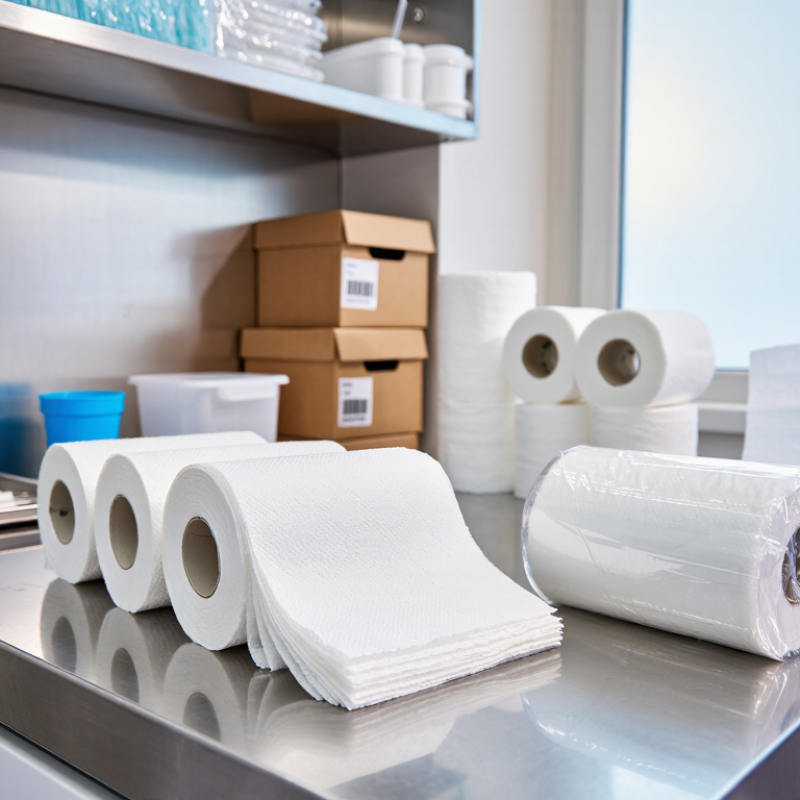
Medical paper towels are disposable, highly absorbent sheets designed for controlled healthcare environments. They usually combine low lint, reliable wet strength, and a soft surface. These features help reduce residue during routine cleaning, hand drying, and patient care.
They are used beside sinks in hospitals, clinics, dental offices, laboratories, and veterinary rooms. Staff may also place them on examination surfaces or use them to wipe small spills. In treatment areas, the towel should not tear easily when wet. That small detail matters. A torn sheet can leave fibers behind or interrupt a careful procedure.
Quality suppliers usually provide clear specifications for basis weight, absorbency, roll size, packaging, and batch control. Buyers should check whether the product is sterile or non-sterile, because ordinary medical paper towels are not automatically sterile. Packaging must remain intact during transport and storage. Moisture, dust, and poor sealing can reduce performance before use. I have found that users often focus only on softness. That is incomplete. Consistent strength and dependable dispensing may matter more in busy rooms. A practical evaluation includes absorbency tests, lint observation, dispenser fit, and a review of production traceability. Even careful purchasing can miss real-world issues. Testing samples in the intended workspace is wiser than relying on a catalog description alone.
What Are Medical Paper Towels and Where Are They Used?
Medical paper towels are disposable, absorbent towels used mainly for hygienic hand drying and controlled wiping in healthcare environments. The chart compares official hand-hygiene time guidance that helps explain when paper towels are used after handwashing.
How to read the chart: Paper towels are primarily required after soap-and-water handwashing. They help dry hands and may be used to turn off the faucet without directly touching a potentially contaminated surface. Alcohol-based handrub generally does not require a paper towel.
Sources: U.S. Centers for Disease Control and Prevention, “Handwashing”; World Health Organization, “WHO Guidelines on Hand Hygiene in Health Care.”
Why Choose a Chinese Medical Paper Towels Manufacturer?
China offers a deep supply base for medical paper towels, from pulp processing to automated converting. This concentration can shorten sourcing cycles and support flexible order quantities. Grand View Research estimated the global paper towels market at about USD 4.3 billion in 2022, with continued growth driven by hygiene awareness. Demand is real, but quality cannot be judged by softness alone.
An experienced Chinese manufacturer should provide batch records, raw-material traceability, absorbency results, wet-strength testing, and lint-control procedures. ISO 9001 supports quality management, while ISO 13485 may be relevant when products are connected to medical-device supply systems. Certification must match the actual product and factory scope. This detail is often overlooked. It should not be.
China also offers practical advantages in packaging customization, roll dimensions, carton design, and production scheduling. Buyers can request pre-shipment samples and independent laboratory verification. The WHO and UNICEF Joint Monitoring Programme reported that about 2.0 billion people lacked basic hygiene services at home in 2022. That figure highlights the importance of reliable hygiene materials, although paper towels alone cannot solve the problem.
Tips: Check fiber composition, basis weight, wet strength, absorbency, packaging cleanliness, and storage conditions. Ask for recent test reports, not only certificates. Visit the facility when possible. A low price can hide unstable pulp quality, excessive lint, or weak cartons. Mistakes still happen, even in audited factories.av电影
How Are Medical Paper Towels Manufactured and Quality Tested?
Medical paper towels begin with controlled cellulose pulp, recycled fiber, or specialized nonwoven materials. Manufacturers refine the fiber mix, remove visible contaminants, and form a uniform web. Water and approved process chemicals may be added to improve softness, wet strength, or absorbency. The sheet then passes through pressing, drying, cutting, folding, and sealed packaging.
A perfect-looking sheet can still fail when wet. Quality teams usually measure basis weight, thickness, tensile strength, wet strength, absorption time, and absorption capacity. ISO 12625-8 provides recognized methods for testing tissue paper absorption. For nonwoven structures, ISO 9073-6 may also apply. Inspectors check lint release, edge cleanliness, odor, package seals, and foreign particles. Microbiological testing is selected according to the intended use. Sterile products require validated sterilization and packaging processes, not merely clean production.
The WHO and UNICEF Joint Monitoring Programme reported that about half of healthcare facilities worldwide lacked basic hygiene services in 2022. This finding shows why dependable drying materials matter in clinical settings. Manufacturing records should connect raw materials, machine settings, test results, and batch release decisions. Human inspection remains useful, but it is not enough alone. A rushed visual check can miss weak seams or poor absorbency. That weakness deserves attention. Reliable suppliers therefore combine laboratory testing, trained operators, equipment calibration, and periodic third-party verification.
What Types of Medical Paper Towels Can Suppliers Provide?
Medical paper towel suppliers usually provide several formats for different clinical tasks. Folded hand towels fit wall dispensers in wards, laboratories, and washrooms. Interfold and Z-fold designs dispense one sheet at a time. This can reduce contact and unnecessary waste. Roll towels suit busy outpatient areas. Center-pull rolls work well where staff need quick access. Small details matter.
Suppliers may also offer examination table paper rolls, couch rolls, and perforated sheets for consultation rooms. These products protect surfaces between patients, but they are not automatically sterile. Sterile towel packs require separate processing, packaging, and documented quality control. For wound-care settings, buyers may request low-lint, high-absorbency towels with consistent sheet strength. Some facilities choose virgin pulp for softness and cleanliness. Others select recycled content where policy and hygiene requirements allow it.
A dependable China-based manufacturer or supplier should provide technical data, sample testing, lot traceability, and clear carton labeling. Ask about basis weight, absorbency, wet strength, dust release, and dispenser compatibility. A specification can look perfect on paper, yet fail during daily use. The cheapest towel may create hidden costs through tearing, overuse, or blocked dispensers. Yet thicker is not always better. It can waste storage space and increase disposal volume. Requirements differ by room, workflow, and local regulations. A careful supplier should admit these trade-offs and adjust specifications instead of promising one universal solution. Buyers should test samples under actual clinical conditions before placing larger orders.
How to Select a Reliable Medical Paper Towels Supplier in China?
Selecting a medical paper towels supplier requires more than comparing prices. Check the material, absorbency, lint level, and sheet strength. In clinics, weak towels can tear during hand drying. Excess lint may also create cleaning problems. Ask for samples from several production batches, not only one attractive sample. Test them after wetting, folding, and rubbing against stainless steel surfaces.
A dependable Chinese supplier should provide clear factory details and quality records. Request product specifications, raw material information, inspection reports, and batch traceability. Confirm whether production follows recognized quality management practices. Independent audits can reveal storage issues, poor hygiene control, or inconsistent packaging. A clean showroom is not enough. The real test happens near the packing line. Check carton labels, inner wrapping, and moisture protection. Small details matter.
Discuss order quantity, lead time, customization, and complaint handling before signing an agreement. Reliable suppliers explain their limits instead of promising everything. Ask how they manage damaged cartons, delayed shipments, and failed inspections. Communication should be accurate and documented. One common mistake is choosing the lowest quotation too quickly. The cheaper option may use thinner paper or weaker packaging. I would also recheck my own requirements, because unclear specifications often cause avoidable disputes. A supplier can be experienced, yet still unsuitable for your facility’s workflow.
China Top Medical Paper Towels Manufacturer and Supplier? - How to Select a Reliable Medical Paper Towels Supplier in China?
| Evaluation Dimension | What to Check | Relevant Standard or Test Reference | Recommended Supplier Evidence | Practical Acceptance Guidance |
|---|---|---|---|---|
| Product application | Confirm whether the product is intended for hand drying, surface wiping, patient-care use, or general cleaning. | Application-specific purchasing specification; applicable local regulations. | Product specification sheet, intended-use statement, application limitations, and sample evaluation record. | Do not accept a general-purpose towel as “medical grade” without a clearly documented intended use and supporting evidence. |
| Fiber composition | Review virgin pulp, recycled fiber, bamboo or blended-fiber content, together with any wet-strength additives. | Supplier declaration and laboratory composition verification where required. | Raw-material declaration, safety data for additives, and batch traceability records. | The material should be consistent with the intended contact, absorbency, strength, and disposal requirements. |
| Basis weight and sheet dimensions | Check grams per square metre, unfolded size, folded size, number of plies, and sheet count per pack. | ISO 12625-1 for tissue and tissue-product terminology and general guidance. | Technical data sheet, approved artwork, inspection report, and packaging specification. | Set a written tolerance for weight, dimensions, ply count, and sheet quantity before placing a purchase order. |
| Dry and wet strength | Assess resistance to tearing and breaking during dispensing, hand drying, and wet handling. | ISO 12625-4 for tensile strength; ISO 12625-5 for wet tensile strength. | Recent third-party or in-house laboratory reports with test method, sample identification, and test date. | Approve only after testing production-representative samples under both dry and wet conditions. |
| Absorbency | Measure water absorption capacity and absorption time for the final sheet construction. | ISO 12625-8 for water absorption time and water absorption capacity. | Laboratory test report and a controlled sample comparison against the approved reference. | Use purchaser-defined minimum performance values because absorbency needs differ by application. |
| Cleanliness and visible defects | Inspect for dirt, oil, foreign particles, holes, discoloration, excessive lint, odor, and damaged packaging. | Documented visual-inspection procedure and purchaser quality specification. | Incoming inspection standard, defect classification, corrective-action procedure, and sample inspection records. | Define critical, major, and minor defects; critical contamination or foreign-material defects should result in rejection. |
| Microbiological control | Determine whether the product is supplied as non-sterile or sterile and identify the required microbial controls. | Applicable purchaser specification and destination-market requirements; sterility claims require validated sterilization and testing processes. | Environmental-monitoring plan, microbial test reports, sanitation procedures, and sterilization validation where applicable. | Never treat ordinary packaged paper towels as sterile unless the supplier provides valid, lot-specific evidence and controlled packaging. |
| Chemical and skin-contact safety | Review dyes, fragrances, lotions, optical brighteners, adhesives, and processing chemicals. | Destination-market chemical restrictions and purchaser-specific restricted-substance requirements. | Material declarations, restricted-substance test reports, safety data sheets for chemical inputs, and change-control records. | For frequent hand or patient contact, fragrance-free and low-additive constructions are often easier to qualify. |
| Manufacturing quality system | Evaluate process control, calibration, nonconforming-product management, complaints, and corrective actions. | ISO 9001 certification may support general quality-system evaluation; certification scope must be checked. | Valid certificate, audit report or audit summary, process flow chart, quality manual, and CAPA records. | Verify that the certificate belongs to the actual manufacturing site and covers the relevant product or process scope. |
| Medical-device claim control | Determine whether the towel is being marketed as a medical device or simply as a hygiene consumable. | Applicable destination-market medical-device rules; ISO 13485 is relevant only where the product and regulatory scope require it. | Regulatory classification statement, registration or listing evidence where applicable, and product labeling review. | Do not rely on “medical,” “hospital,” or “clinical” wording alone as proof of regulatory approval. |
| Packaging and dispensing | Check moisture protection, dust protection, carton strength, dispensing compatibility, and pack identification. | Purchaser packaging specification and applicable transport-packaging requirements. | Packaging drawings, drop or compression test records where relevant, and dispenser compatibility samples. | Each package should show product code, lot number, quantity, production date, and storage conditions when required. |
| Traceability and batch release | Confirm that raw materials, production lots, inspection results, and shipments can be linked. | Supplier traceability procedure and purchaser quality agreement. | Lot coding procedure, certificate of analysis or conformity, retained-sample policy, and recall procedure. | A reliable supplier should be able to identify affected lots quickly and provide supporting production records. |
| Factory verification | Confirm actual production location, equipment, hygiene controls, storage areas, and subcontracted processes. | Purchaser supplier-audit checklist and risk-based qualification procedure. | Remote or on-site audit, business license information, production photographs, capacity statement, and subcontractor disclosure. | The audited facility, sample-production site, and shipping documentation should be consistent. |
| Order consistency and capacity | Assess minimum order quantity, lead time, monthly capacity, seasonal continuity, and emergency replenishment ability. | Mutually agreed supply agreement and production planning requirements. | Capacity statement, production schedule, on-time-delivery records, and business-continuity plan. | Compare at least three purchase cycles rather than judging reliability from one successful sample order. |
| Sample approval and change control | Control changes to pulp, additives, machinery, packaging, dimensions, and manufacturing location. | Purchaser quality agreement and documented change-notification procedure. | Golden sample, signed specification, change-control form, and advance-notification commitment. | Require written approval before any change that may affect safety, performance, appearance, or regulatory status. |
| Export and documentation capability | Review export experience, commercial documents, labeling, carton marks, and destination-country requirements. | Destination-market import, labeling, customs, and product-documentation requirements. | Commercial invoice, packing list, certificate of origin where required, test reports, and export references with customer details removed. | Documents should match the product description, lot information, quantities, and shipping configuration. |
| Total cost of ownership | Compare product price, freight, packaging, testing, tooling, storage, waste, and dispenser compatibility. | Purchaser cost model and agreed commercial terms. | Formal quotation, Incoterms, payment terms, testing charges, tooling costs, and replacement policy. | Select on verified performance, compliance, and delivered cost—not on the lowest unit price alone. |
Note: Acceptance limits should be agreed in the purchase specification and confirmed against the regulations of the destination market. Standards and regulatory requirements may vary according to the product’s intended use and claims.
Article Source:
Contact Us
Feel free to contact us anytime for questions, support, or assistance. We're here to help you with any inquiries you have.
- Address: 10220 S. Dolfield Rd Suite 110
Owings Mills, MD, 21117 - Email: sale@oshanbeauty.com
- Call Us: (410) 356-0000
- Working hours:
Monday – Friday: 9am – 5pm
Saturday and Sunday: Closed
