
Blog
China Top Medical Syringe Pump Manufacturers?
Choosing among China’s top Medical Syringe Pump manufacturers requires more than comparing catalog prices. Hospitals, laboratories, and distributors need dependable devices for controlled fluid delivery. Small errors can affect dosage accuracy, treatment timing, and patient safety.
This guide examines manufacturers through practical evidence, including product design, production experience, quality management, and after-sales support. Look for documented ISO 13485 systems, traceable components, electrical safety testing, and clear calibration procedures. A reliable manufacturer should explain flow-rate accuracy, syringe compatibility, occlusion alarms, battery performance, and cleaning requirements. Factory audits can reveal details that websites often miss, such as organized assembly areas and properly labeled inspection records.
No supplier is perfect.
A polished catalog does not prove long-term performance. Some companies may offer strong engineering but limited overseas service. Others may provide responsive support while lacking broad clinical validation. This is where careful comparison matters. Request sample units, test alarm response, inspect user interfaces, and review complaint-handling procedures before making a decision. Feedback from biomedical engineers and experienced distributors can add valuable context, although it should be checked against formal documentation.
The manufacturers discussed here are evaluated for reliability, technical competence, production consistency, and transparent communication. Certifications alone are not enough. A trustworthy partner should support training, spare parts, software updates, and maintenance throughout the product lifecycle. Readers should confirm current certifications and local regulatory requirements before procurement, because product approvals and specifications can change.
What Is a Medical Syringe Pump?
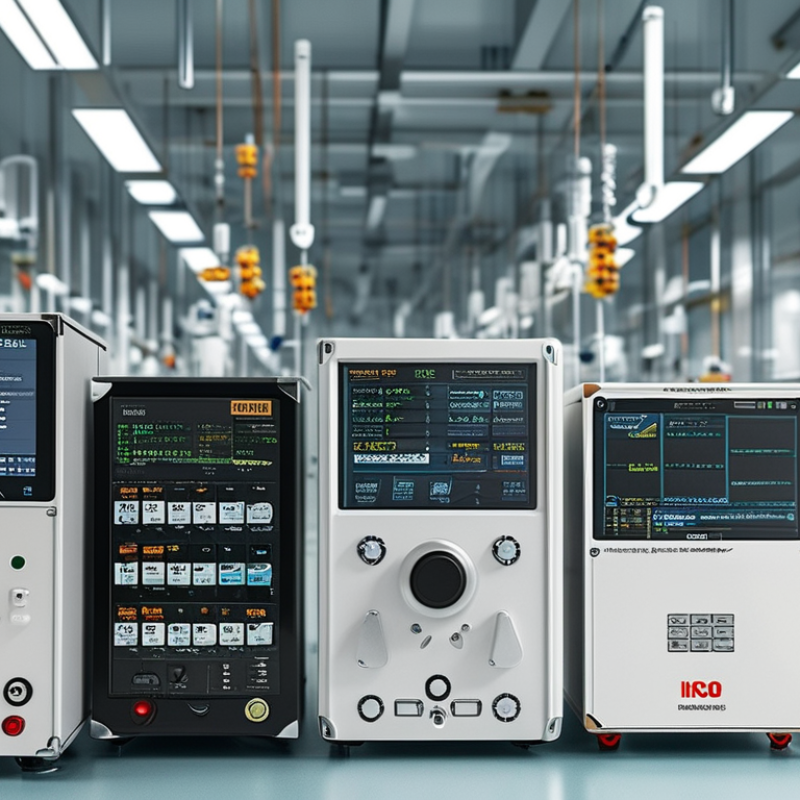
A medical syringe pump is a compact infusion device. It pushes medication through a syringe at a controlled rate. A motor moves the plunger gradually, often by milliliters per hour. Clinicians use it when ordinary gravity infusion cannot provide enough precision.
The device typically includes a syringe holder, drive mechanism, touchscreen, alarm system, and rechargeable battery. It can deliver very small volumes, which matters in neonatal care, anesthesia, and intensive care. The World Health Organization reports that around 16 billion injections occur worldwide each year. Many require accurate dosing and careful handling. A pump reduces manual variation, but it cannot correct a wrongly prepared prescription.
Safety depends on more than flow-rate accuracy. IEC 60601-2-24 addresses particular safety requirements for infusion pumps and controllers. The U.S. Food and Drug Administration also highlights risks such as occlusion, free flow, incorrect programming, and alarm failure. Operators should check syringe size, medication concentration, tubing position, and battery status before use.
Small details matter.
For buyers comparing Chinese manufacturers, test records deserve close attention. Ask for accuracy data across different flow rates, alarm verification, electrical safety reports, and maintenance procedures. A published specification may show ideal laboratory performance, not busy ward conditions. That gap is easy to miss. It should invite questions, not trust.
China’s Leading Medical Syringe Pump Manufacturers
China Top Medical Syringe Pump Manufacturers?
China’s leading medical syringe pump manufacturers serve hospitals, clinics, and home-care settings worldwide. Their strength lies in scalable production, electronic control, and increasingly traceable quality systems. The World Health Organization estimates that about 16 billion injections occur globally each year. This volume highlights the need for stable flow, clear alarms, and dependable occlusion detection.
Market reports also show continued demand for infusion devices as chronic care expands. Fortune Business Insights reported that the global infusion pump market reached about USD 10 billion in the early 2020s. However, market figures differ by report scope. A responsible buyer should examine test records, not only sales claims. Key checks include IEC 60601-1 compliance, IEC 60601-2-24 performance, battery endurance, alarm response, and calibration procedures. No factory is perfect. A supplier that explains limitations may deserve more trust than one promising zero defects.
Tips: Ask for sample-based accuracy data at different syringe sizes. Confirm performance after transport, cleaning, and low-battery conditions. Review the production audit trail and after-sales response time. A practical test should include a 12-hour delivery cycle, an occlusion alarm check, and inspection of the display under dim ward lighting. WHO injection-safety guidance and independent laboratory reports can support a more reliable decision.
Key Technologies and Product Features
China Top Medical Syringe Pump Manufacturers: Key Technologies and Product Features
China’s leading syringe pump manufacturers increasingly focus on precision, safety, and connected care. A 2024 MarketsandMarkets report valued the global infusion pump market at over USD 10 billion. It also identified smart connectivity and ambulatory care as important growth areas. These trends influence Chinese production lines and hospital purchasing decisions.
Modern syringe pumps commonly use stepper motors, microprocessor control, and anti-bolus software. These systems help maintain stable flow rates during low-volume medication delivery. Occlusion detection is essential. Pressure sensors should identify blockage before tubing damage or delayed therapy occurs.
Many current models provide audible and visual alarms, battery backup, drug libraries, and event records. IEC 60601-2-24 remains a key safety reference for infusion equipment. However, software features do not automatically guarantee clinical safety. Usability testing still matters.
Tips: Check flow-rate accuracy across the full operating range, not only at the standard setting. Review alarm response time, battery duration, cleaning resistance, and compatibility with common syringe sizes. Ask for verification records based on recognized testing methods. A clear interface reduces programming mistakes. Small errors matter. Buyers should also examine service training and replacement-part availability. These details often receive less attention than screen size, yet they affect daily reliability. Some product claims appear impressive but need independent validation.
How to Evaluate Chinese Syringe Pump Suppliers
China Top Medical Syringe Pump Manufacturers?
Choosing a Chinese syringe pump supplier requires more than comparing prices. Grand View Research estimated the global infusion pump market at about USD 13 billion in 2023. Asia-Pacific remains a major growth region. This growth increases supplier choices, but it also increases evaluation pressure. A polished factory tour is not proof of consistent production.
Request an ISO 13485 certificate, recent audit findings, and clear batch traceability. Check applicable NMPA registration and export documentation. Review testing against IEC 60601-1 and IEC 60601-2-24. Ask for accuracy results across different syringe sizes and flow rates. Examine occlusion alarms, battery endurance, electromagnetic compatibility, and calibration records. A supplier should explain its corrective-action process with real examples, not vague promises.
Production evidence matters most. Inspect incoming-material controls, software version records, final inspection sheets, and complaint-response times. Ask whether critical components have qualified alternatives. This reduces disruption, but substitution can change performance. I would request samples from separate production batches, then repeat flow-rate tests independently. Small deviations may reveal larger process weaknesses. Supplier scorecards should include defect rates, delivery performance, service response, and documentation quality. Market reports offer useful context, yet their forecasts differ by methodology. That is easy to overlook. A technically strong supplier may still lack dependable after-sales support in your region. Check spare-part availability, training materials, and escalation contacts before signing a long-term agreement.
| Evaluation Dimension | What to Verify | Objective Benchmark or Acceptance Point | Required Evidence | Suggested Weight | Rating Guide |
|---|---|---|---|---|---|
| Regulatory Status | Whether the exact syringe pump model is legally registered for the target market. | For China, verify the applicable NMPA registration or filing. For Europe, confirm compliance with Regulation (EU) 2017/745 where applicable. For the United States, verify the correct FDA pathway before making market-access claims. | Registration certificate, declaration of conformity, product classification, official database record, and current product labeling. | 15% | 5 = Exact model and target market fully documented; 1 = Only general company certificates. |
| Quality Management System | Effectiveness and scope of the supplier’s medical-device quality system. | ISO 13485 certification should cover the manufacturing site, relevant device category, and applicable design or production activities. Check certificate validity and certification scope. | Current ISO 13485 certificate, audit body details, scope statement, corrective-action records, and quality agreement. | 12% | 5 = Valid, relevant, independently verifiable system; 1 = Certificate unavailable or scope mismatch. |
| Electrical and Functional Safety | Electrical safety, essential performance, alarm behavior, and protection against foreseeable misuse. | Testing should address IEC 60601-1 and the particular requirements of IEC 60601-2-24 for infusion pumps and controllers, when applicable to the product configuration. | Recognized laboratory test reports, CB Scheme documentation where available, risk-control records, and alarm test results. | 12% | 5 = Complete model-specific reports; 1 = Self-declaration without technical evidence. |
| Flow-Rate Performance | Accuracy and stability across the declared syringe sizes and operating conditions. | Do not compare flow-rate figures alone. Confirm the declared minimum and maximum rates, start-up behavior, bolus characteristics, occlusion recovery, and accuracy under representative syringe types, temperatures, and back pressures. | Model-specific performance curves, test protocol, raw data, syringe compatibility list, and acceptance limits. | 12% | 5 = Repeatable data across the full claimed operating range; 1 = Only a single nominal value. |
| Syringe Compatibility | Mechanical fit and reliable operation with the intended syringe sizes and manufacturers. | Verify the supported syringe brands, sizes, graduations, materials, flange geometry, and automatic recognition method. Compatibility must be validated rather than inferred from barrel volume alone. | Compatibility matrix, mechanical drawings, validation reports, user instructions, and sample testing records. | 10% | 5 = Broad, validated matrix with clear exclusions; 1 = Compatibility based only on marketing statements. |
| Alarm and Safety Functions | Detection of occlusion, empty syringe, near-end, end-of-infusion, power failure, door or clamp problems, and incorrect loading. | Each alarm should have a defined trigger condition, visual and audible indication, user response, and safe-state behavior. Occlusion thresholds should be specified for relevant flow rates. | Alarm specification, verification records, risk analysis, user manual, and demonstration video or witnessed test. | 10% | 5 = Complete, tested, and clearly documented; 1 = Basic alarm list without thresholds or verification. |
| Software and Cybersecurity | Software lifecycle controls, data integrity, access control, and protection of connected functions. | For software-controlled medical devices, assess IEC 62304 processes where applicable, usability engineering under IEC 62366-1, update control, user authentication, and network-security risk management for connected models. | Software architecture summary, version history, cybersecurity policy, vulnerability response process, usability file, and release records. | 8% | 5 = Controlled lifecycle and documented security process; 1 = No software-change or vulnerability procedure. |
| Biocompatibility and Materials | Safety of patient-contacting or fluid-path materials and resistance to cleaning agents. | For patient-contacting materials, evaluate the applicable biological safety endpoints under ISO 10993 based on contact type and duration. Confirm that materials are suitable for the intended clinical environment. | Material declarations, supplier certificates, biological evaluation, chemical compatibility data, and cleaning or disinfection instructions. | 6% | 5 = Material and biological evaluation are traceable; 1 = Generic material names only. |
| Manufacturing and Traceability | Process control, incoming inspection, calibration, batch records, and serial-number traceability. | Critical components should have defined acceptance criteria. Measuring equipment must be calibrated, and finished devices should be traceable to production records and release inspection. | Factory audit report, process flow, inspection plan, calibration certificates, device history records, and traceability procedure. | 6% | 5 = Full traceability and controlled production; 1 = Assembly capability cannot be verified. |
| After-Sales Support | Technical service, spare parts, training, warranty handling, and complaint response. | Require written response-time targets, spare-parts availability, service training, preventive-maintenance instructions, complaint handling, and field-safety escalation procedures. | Service-level agreement, warranty terms, spare-parts list, training plan, complaint procedure, and service network description. | 5% | 5 = Measurable support commitments; 1 = Informal or undefined support. |
| Commercial Reliability | Delivery consistency, customization control, capacity, and financial or operational stability. | Evaluate lead time using a written production schedule, not a verbal estimate. Confirm minimum order quantity, engineering-change notification, production capacity, and continuity plan. | Capacity statement, purchase-contract terms, delivery history, change-control procedure, business-continuity plan, and reference projects without confidential details. | 4% | 5 = Transparent and contractually controlled; 1 = Unclear capacity or repeated undocumented changes. |
Quality Standards, Certifications, and Export Support
China Top Medical Syringe Pump Manufacturers: Quality Standards, Certifications, and Export Support
Reliable syringe pump manufacturers should demonstrate more than attractive specifications. Their production systems commonly follow ISO 13485, with documented design controls, supplier checks, and batch traceability. Each pump should undergo flow-accuracy, occlusion-alarm, battery, and electrical-safety testing. Test records matter.
Relevant standards may include IEC 60601-1 for basic safety and IEC 60601-2-24 for infusion pump requirements. ISO 14971 risk management is also important. Buyers should verify certificate numbers, issuing bodies, product models, and market scope. A certificate alone proves little. Scope matters.
Export support becomes visible during real procurement. Experienced suppliers can prepare commercial invoices, packing lists, declarations, test reports, and multilingual instructions. They should explain voltage options, plug types, software versions, warranty terms, and spare-parts availability. For regulated markets, documentation may require local registration or authorized representation. Requirements differ by destination.
Ask for sample inspection records and a clear complaint-handling process. Confirm how quickly technical teams answer alarm-code questions. Good support includes remote training, installation guidance, and replacement procedures. However, communication is not always flawless. Translation errors can appear in manuals, and delivery estimates may change after inspection. Careful buyers should review every document before shipment and request corrective action in writing.
China Medical Syringe Pump Manufacturers: Quality Standards, Certifications, and Export Support
The chart maps the publication or adoption year of major standards and regulatory frameworks commonly referenced when evaluating syringe pump quality systems, product safety, biocompatibility, and international export readiness. Certification status should be verified for each manufacturer and product model.
References include ISO 13485:2016, ISO 14971:2019, IEC 60601-1 with its 2020 amendment, IEC 60601-2-24:2012, ISO 10993-1:2018, and Regulation (EU) 2017/745.
Article Source:
Contact Us
Feel free to contact us anytime for questions, support, or assistance. We're here to help you with any inquiries you have.
- Address: 10220 S. Dolfield Rd Suite 110
Owings Mills, MD, 21117 - Email: sale@oshanbeauty.com
- Call Us: (410) 356-0000
- Working hours:
Monday – Friday: 9am – 5pm
Saturday and Sunday: Closed
