Blog
China Best Injectable Treatments Suppliers for Global Buyers
Choosing a supplier for Injectable Treatments requires more than comparing prices or browsing a polished catalogue. Global buyers need to assess product quality, documentation, distribution capability, and the supplier’s experience with international orders. “Best” is not universal. It depends on the product category, destination market, intended clinical use, and local requirements.
The strongest supplier relationships begin with careful verification. Buyers can request current product specifications, batch traceability records, quality-system information, and clear details about storage and shipping conditions. Temperature-sensitive products may need documented cold-chain handling. Check whether each product is authorized for its intended use in the destination market, and confirm requirements with qualified regulatory professionals. Rules differ by country. Details matter.
This guide explores how buyers can compare Chinese suppliers, ask practical questions, and identify gaps before placing an order. A factory visit or independent audit may provide useful insight, while written records help support ongoing checks. Still, no checklist guarantees a perfect partnership. Supplier websites can be incomplete, and capabilities may change. That deserves a second look. Buyers should verify important claims directly and avoid relying on low prices or sales promises alone. Clinical decisions belong to licensed healthcare professionals, not procurement teams. With a measured approach, global buyers can make more informed sourcing decisions and build relationships based on transparency, consistent communication, and suitable quality controls.

What Injectable Treatments Does China Supply? Key Product Categories and Uses
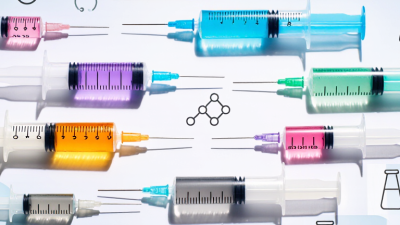
China-based suppliers may offer several categories of aesthetic injectables, subject to product registration and local market rules. Hyaluronic acid (HA) fillers are used to restore facial volume or soften selected lines. Formulations vary in concentration, cross-linking, and intended injection depth, so they are not interchangeable.
Botulinum toxin products are used by qualified clinicians to temporarily reduce certain expression lines. Collagen-stimulating injectables aim to support gradual changes in skin structure, while skin-quality injectables are marketed for concerns such as hydration or texture. Uses depend on the approved product and indication in each country.
Read the technical file closely. A catalog description alone does not establish suitability or approval.
Demand provides useful context, but it does not verify any supplier’s quality. ISAPS’s 2023 Global Survey reported approximately 8.8 million botulinum toxin procedures and 5.5 million HA procedures worldwide. These figures describe global procedures, not Chinese exports.
Buyers should check batch documentation, storage requirements, manufacturing controls, and destination-market authorization.
Details matter. Product categories can sound simple on a sales sheet; clinical use and regulatory status are less simple.
China’s Injectable Supply Chain: APIs, Fill-Finish, and Packaging
China’s injectable supply chain is best assessed as three connected controls: API consistency, sterile fill-finish, and packaging integrity. A low API quote means little if impurity profiles shift between lots. Buyers should request batch-specific certificates, impurity methods, and change-control histories, then compare them with approved specifications. Small differences matter.
At fill-finish, review aseptic process validation, environmental monitoring trends, and container-closure integrity data—not just line capacity. The FDA’s 2019 report, Drug Shortages: Root Causes and Potential Solutions, found that 62% of drug shortages from 2013 to 2017 were associated with quality problems. That figure is not China-specific, but it highlights the operational risks of weak manufacturing controls. Ask for media-fill results and deviation closure records. A polished audit deck is not enough.
Packaging deserves equal scrutiny. For vials, check stopper compatibility, seal integrity, and transport testing; for prefilled syringes, examine assembly controls and functional test results. China-based suppliers may offer coordinated sourcing across these stages, yet integration should be verified, not assumed. I would not treat a single audit score as proof of long-term reliability. Request lot-level records and investigate recurring deviations. The paperwork can look tidy. The trend data tells more.
China’s Injectable Supply Chain: APIs, Fill-Finish, and Packaging
The chart shows a typical sequence from active pharmaceutical ingredient (API) production through finished-product release. Values indicate process order, not duration, production volume, or supplier capacity. Actual workflows vary by product and manufacturing site.
WHO Estimates 1 in 10 Medical Products in LMICs Are Substandard or Falsified
WHO estimates that one in ten medical products in low- and middle-income countries may be substandard or falsified. This figure is an estimate, not a verdict on every market or supplier. Still, it gives global buyers of injectable treatments a serious reason to check quality beyond a polished catalogue.
Injectable products require careful control because sterility, correct storage, and accurate batch records matter at every stage.
Ask suppliers for current manufacturing and quality documentation, then verify it with the issuing authority where possible. Check batch-specific test records, packaging details, expiry dates, and storage requirements. For products requiring temperature control, review shipment records and inspect the receiving temperature log. A clean carton helps, but it proves little by itself. Small details count. Documents can reassure, yet they cannot replace independent checks or a clear process for reporting quality concerns. Even experienced buyers can miss gaps when timelines are tight; that pressure deserves attention, not excuses. A supplier’s willingness to explain traceability, testing, and corrective actions can reveal how seriously it treats patient safety.
EU GMP Annex 1: Four Cleanroom Grades for Sterile Manufacturing
For global buyers of injectable treatments, cleanroom controls are a practical measure of manufacturing discipline. EU GMP Annex 1 describes four cleanroom grades: A, B, C, and D. They reflect different levels of contamination control, not a simple ranking of supplier quality. Grades matter. Buyers should ask how each area supports the specific manufacturing step.
Grade A protects high-risk operations, such as exposed sterile product during filling. Grade B commonly provides the background environment for Grade A aseptic work, subject to the process and technology used. Grades C and D support less critical stages, including some preparation activities. The required grade depends on the process risk and contamination control strategy. Room classification alone cannot prove that a process is controlled. Monitoring results, airflow studies, cleaning records, and staff practices also matter. Details can be easy to overlook.
Tips: During supplier reviews, ask to see the cleanroom layout and the rationale for each grade. Check whether monitoring covers both operating and at-rest conditions. Look for recent deviation records, too; a polished room is reassuring, but real performance is shown over time. One awkward gap may deserve more attention than a perfect presentation.
Global Buyer Due Diligence: Verify NMPA Status, GMP, Cold Chain, and Export Records
China Best Injectable Treatments Suppliers for Global Buyers
A supplier’s brochure is a starting point, not evidence. Check the product and manufacturing site against current NMPA records, including registration status and approved indications. Confirm that inspection findings and GMP compliance apply to the specific facility and production line. A certificate with a broad company name may not cover the site making your injectable.
Cold-chain claims need records. Request shipment temperature logs, calibrated data-logger details, packaging qualification, and written excursion procedures. Match these against the product’s labeled storage range and the actual route, including airport handoffs and customs delays. WHO’s 2017 global surveillance report estimated that one in ten medical products in low- and middle-income countries is substandard or falsified. That figure covers many product types, not injectables alone, but it underlines why document checks matter.
Export history should be verifiable, not just presented in a sales deck. Review redacted invoices, shipping documents, batch release records, and certificates of analysis, then confirm that product, batch, and destination details align. Ask how complaints, temperature excursions, and recalls are documented. Paperwork can look convincing. It is not proof. Independent checks take time, and even careful buyers may miss gaps; record unresolved questions before placing an order.
WHO, A Study on the Public Health and Socioeconomic Impact of Substandard and Falsified Medical Products, 2017.
Related Posts
-
What Are the Top 10 Types of Injectable Treatments?
-

China Top 10 Rosacea Treatment Manufacturers
-

Top Pigmentation Treatment Manufacturers in China
-
China Best Sun Damage Treatment Products for Global Buyers
-

What Are the 10 Best Facial Rejuvenation Tips?
-

What is the Best Rosacea Treatment for Effective Relief?
Contact Us
Feel free to contact us anytime for questions, support, or assistance. We're here to help you with any inquiries you have.
- Address: 10220 S. Dolfield Rd Suite 110
Owings Mills, MD, 21117 - Email: sale@oshanbeauty.com
- Call Us: (410) 356-0000
- Working hours:
Monday – Friday: 9am – 5pm
Saturday and Sunday: Closed