
Blog
How to Source Skin Care Treatments Globally in 2026?
Sourcing Skin Care Treatments globally in 2026 requires more than comparing prices and packaging. Buyers must evaluate product safety, supplier competence, regulatory status, and real-world performance. A polished website proves very little. Reliable sourcing begins with verified manufacturers, transparent ingredient records, and documented quality systems.
Experienced procurement teams usually request certificates of analysis, stability data, manufacturing licenses, and batch traceability. They also examine whether claims match available scientific evidence. A treatment promising dramatic results may contain unclear language or weak support. That deserves scrutiny. Country-specific rules matter, too. Ingredients, labeling, import documents, and permitted claims can differ across markets. Professional buyers should consult qualified regulatory specialists before placing orders.
Practical testing adds another layer of confidence. A team might inspect sealed samples, review packaging under warehouse lighting, and compare lot numbers against shipping records. Supplier interviews can reveal response times and recall procedures. Independent laboratory testing may be appropriate when risk or uncertainty is high. No sourcing plan is flawless. Documents can become outdated, and supplier performance can change after approval. That uncomfortable possibility should remain visible.
This guide explores how to build a responsible global sourcing process for Skin Care Treatments in 2026. It considers supplier discovery, due diligence, quality assurance, ethical production, logistics, and post-market monitoring. The goal is not simply to find a cheaper product. It is to establish a defensible supply chain that protects consumers, supports compliant businesses, and earns trust through evidence. Mistakes may still happen. Good systems make them easier to detect and correct.
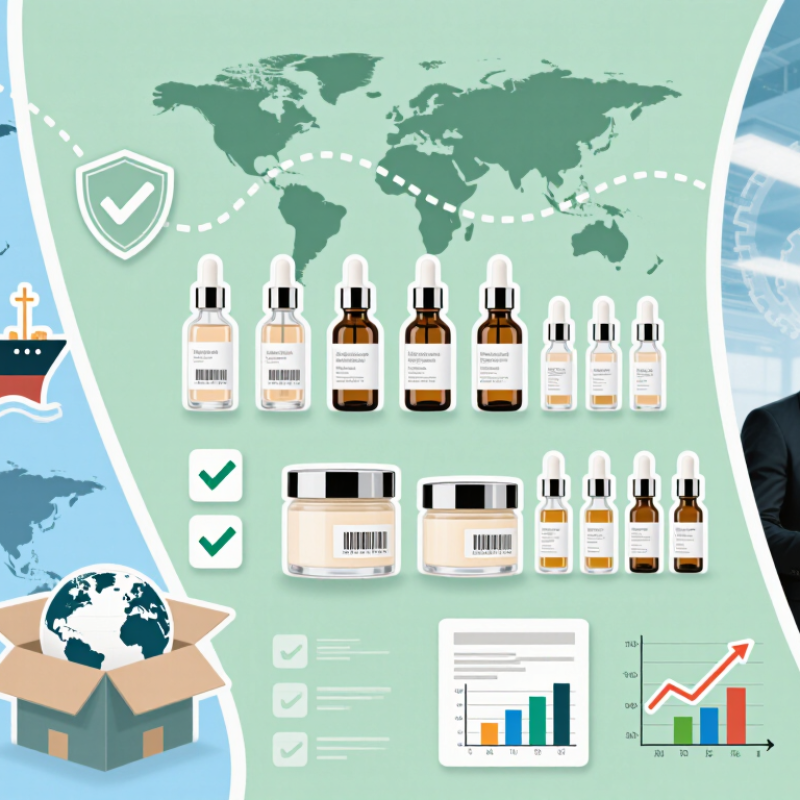
Define Your Global Skin Care Treatment Sourcing Goals
How to Source Skin Care Treatments Globally in 2026?
Define Your Global Skin Care Treatment Sourcing Goals
Global sourcing begins with a clear treatment goal, not a supplier directory. Decide whether you need hydration, barrier support, gentle exfoliation, or another defined function. Then set measurable targets for texture, shelf life, packaging, cost, and delivery time. A treatment brief should name the intended user, application method, skin type, and preferred format.
Request complete ingredient documentation, safety assessments, stability data, and manufacturing quality records. Check whether the formula can meet destination-market requirements before paying for large samples. Ask about minimum order quantities, batch consistency, traceability, and change-control procedures. Quality claims need evidence. Vague promises create expensive delays. Small gaps matter.
Tips: Build a supplier scorecard with weighted categories, such as safety evidence, regulatory readiness, communication, lead time, and total cost. Compare at least three qualified suppliers when practical. Test samples under realistic storage and use conditions. Record every decision in dated files. Do not guess. My own sourcing plans have sometimes focused too heavily on price, while overlooking customs timing and reformulation risks. That mistake is worth including in your goals. Leave room for failed samples, updated regulations, and honest feedback from independent evaluators. Reliable sourcing is not perfect forecasting; it is disciplined preparation with documented checks.
How to Source Skin Care Treatments Globally in 2026? – Define Your Global Skin Care Treatment Sourcing Goals
Global sourcing planning matrix for cosmetic skin care treatments and related products
| Sourcing Dimension | Global Goal for 2026 | Relevant Market or Treatment Type | Required Evidence or Data | Practical Sourcing Target | Priority |
|---|---|---|---|---|---|
| Product Classification | Confirm that each product is classified correctly before supplier approval. | Topical creams, serums, cleansers, masks, exfoliating products and professional-use cosmetics. | Ingredient list, intended use, product claims, directions, concentration ranges and route of application. | No supplier is approved until the product’s cosmetic, quasi-drug, medical-device or drug status is reviewed for each target market. | Critical |
| European Union Compliance | Source products that can meet the EU Cosmetics Regulation requirements. | Cosmetic skin care products sold in EU and EEA markets. | Product Information File, Cosmetic Product Safety Report, qualified safety assessment, responsible person, compliant labeling and CPNP notification. | Obtain a complete technical file before commercial shipment and verify that all claims are supported. | Critical |
| United States Compliance | Select suppliers able to support obligations introduced or strengthened under the Modernization of Cosmetics Regulation Act. | Cosmetic skin care products distributed in the United States. | Facility registration status, product listing support, ingredient and safety records, adverse-event process and substantiation for claims. | Use a supplier with documented batch traceability, complaint handling and recall procedures. | Critical |
| United Kingdom Compliance | Prepare products for the separate Great Britain cosmetics framework after EU market assessment. | Cosmetics sold in Great Britain and, where applicable, Northern Ireland. | UK responsible person, safety assessment, Product Information File, compliant English labeling and SCPN notification for Great Britain. | Maintain separate market checklists rather than assuming EU documentation automatically completes UK requirements. | High |
| China Market Entry | Separate ordinary cosmetics from special cosmetics before selecting the route to market. | Facial care, body care, cleansing products, sunscreen, hair-coloring and anti-hair-loss products. | Ingredient compliance, Chinese labeling, safety assessment, testing or documentation required by the applicable category, and notification or registration records. | Avoid unsupported efficacy claims and obtain a China-specific regulatory review before production artwork is finalized. | Critical |
| Japan Market Fit | Determine whether the product is a cosmetic or a quasi-drug according to its ingredients and claims. | Brightening, acne-care, anti-roughness, moisturizing and cleansing products. | Japanese labeling, ingredient nomenclature, claim review, quality records and, for quasi-drugs, the applicable approval or notification pathway. | Use conservative claims unless the supplier can provide market-specific substantiation. | High |
| Ingredient Safety | Reduce safety and reformulation risks by screening ingredients before sampling. | Products containing exfoliating acids, retinoid-related ingredients, essential oils, preservatives or fragrance. | Full INCI list, concentration or range, impurity profile, allergen information, microbiological limits and stability data. | Reject formulas with undisclosed proprietary blends or incomplete concentration information. | Critical |
| Efficacy Claims | Match every marketing statement to credible evidence and the legal definition of a cosmetic claim. | Claims such as hydration, skin smoothing, cleansing, appearance of fine lines and appearance of uneven tone. | Instrumental testing, consumer-use studies, expert assessment, literature review and final claim wording. | Require a claim-substantiation file before approving packaging or digital advertising. | Critical |
| Quality Management | Prioritize suppliers operating under documented cosmetic good manufacturing practices. | All leave-on and rinse-off cosmetic treatments. | ISO 22716-based procedures, batch records, deviation reports, corrective actions, supplier qualification and internal audit records. | Complete a remote or on-site quality audit before the first commercial order. | Critical |
| Microbiological Control | Minimize contamination risk, especially for water-based and preservative-sensitive formulas. | Emulsions, gels, toners, masks, eye-area products and products packaged in jars. | Microbiological test results, preservative efficacy testing, water-quality controls and packaging compatibility data. | Approve only batches meeting the agreed microbiological specification and release procedure. | Critical |
| Stability and Shelf Life | Set a defensible shelf-life target for multiple climate zones and transport conditions. | Products shipped across temperate, hot-humid and hot-dry markets. | Real-time and accelerated stability data, freeze–thaw results, light exposure data and packaging compatibility. | Do not print a shelf life or period-after-opening symbol without supporting stability evidence. | High |
| Packaging and Labeling | Design one adaptable packaging system that can support market-specific labels. | Multi-market retail and professional-use skin care treatments. | Ingredient declaration, nominal content, batch code, responsible entity, warnings, directions, country-specific language and recycling information where required. | Reserve sufficient label space for translation, local legal details and market-specific warnings. | High |
| Supplier Capacity | Secure production capacity without sacrificing quality or batch consistency. | New product development, contract manufacturing and private-label programs. | Monthly capacity, equipment list, staffing, lead-time history, batch-size limits and business-continuity plan. | Qualify at least one primary and one backup source for high-volume or high-risk products. | High |
| Minimum Order Quantity | Align order quantities with forecast demand, shelf life and cash-flow limits. | Stock formulas, semi-custom formulas and fully custom formulations. | MOQ by formula, fill size, packaging format, artwork method and production line. | Compare total landed cost at pilot, first commercial and scale-up volumes instead of evaluating unit price alone. | High |
| Lead-Time Planning | Build a realistic timeline from formula approval to market-ready inventory. | Custom formulas, imported finished goods and products requiring market notification or registration. | Sampling time, testing time, artwork approval, regulatory review, component availability, production and shipping time. | Add contingency for testing, customs clearance, reformulation and documentation corrections; supplier estimates are not regulatory guarantees. | High |
| Cost and Landed Margin | Evaluate the full landed cost rather than factory price alone. | Cross-border sourcing and regional distribution. | Product cost, packaging, testing, regulatory work, freight, insurance, duties, taxes, warehousing and quality inspection. | Set a maximum landed-cost percentage based on the intended channel and target gross-margin model. | High |
| Sustainability Data | Reduce environmental risk while avoiding unsupported sustainability claims. | Packaging-intensive products, rinse-off products and products using agricultural or bio-based ingredients. | Material composition, recycled-content evidence, recyclability by market, water-use information, certifications and supplier environmental records. | Use measurable claims supported by documentation and avoid broad terms such as “eco-friendly” without defined criteria. | High |
| Traceability and Recall Readiness | Enable rapid identification of affected materials, batches and distribution destinations. | All imported, contract-manufactured and multi-market products. | Raw-material lot records, finished-batch records, packaging codes, shipment records, complaint logs and recall procedures. | Maintain a documented one-step-back and one-step-forward traceability process for every commercial batch. | Critical |
Related Posts
-
What Are China Best Skin Care Treatments?
-
What Are China Top Skin Care Treatments Suppliers?
-
How to Improve Skin Texture in 2026?
-
China Best Sun Damage Treatment Products for Global Buyers
-
10 Best Laser Hair Removal Machines for Global Buyers?
-

China Best Hair Restoration Solutions for Global Buyers?
Contact Us
Feel free to contact us anytime for questions, support, or assistance. We're here to help you with any inquiries you have.
- Address: 10220 S. Dolfield Rd Suite 110
Owings Mills, MD, 21117 - Email: sale@oshanbeauty.com
- Call Us: (410) 356-0000
- Working hours:
Monday – Friday: 9am – 5pm
Saturday and Sunday: Closed